Context
01Problem
Desktop adoption moved slowly. Users did not update often. They expected newer releases to be less stable than older ones, and their models were most compatible with older builds, so people stayed on known-good versions for years.
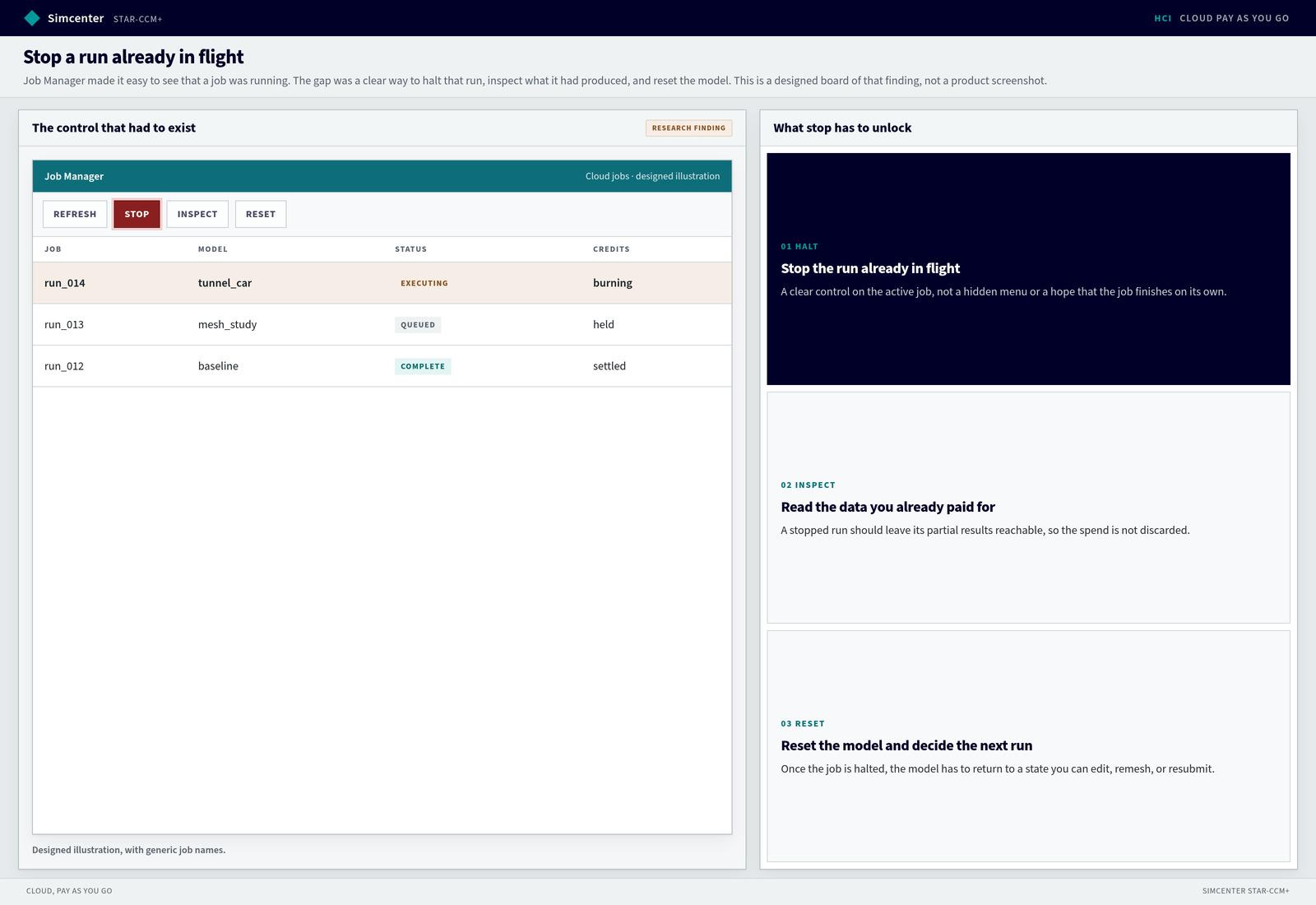
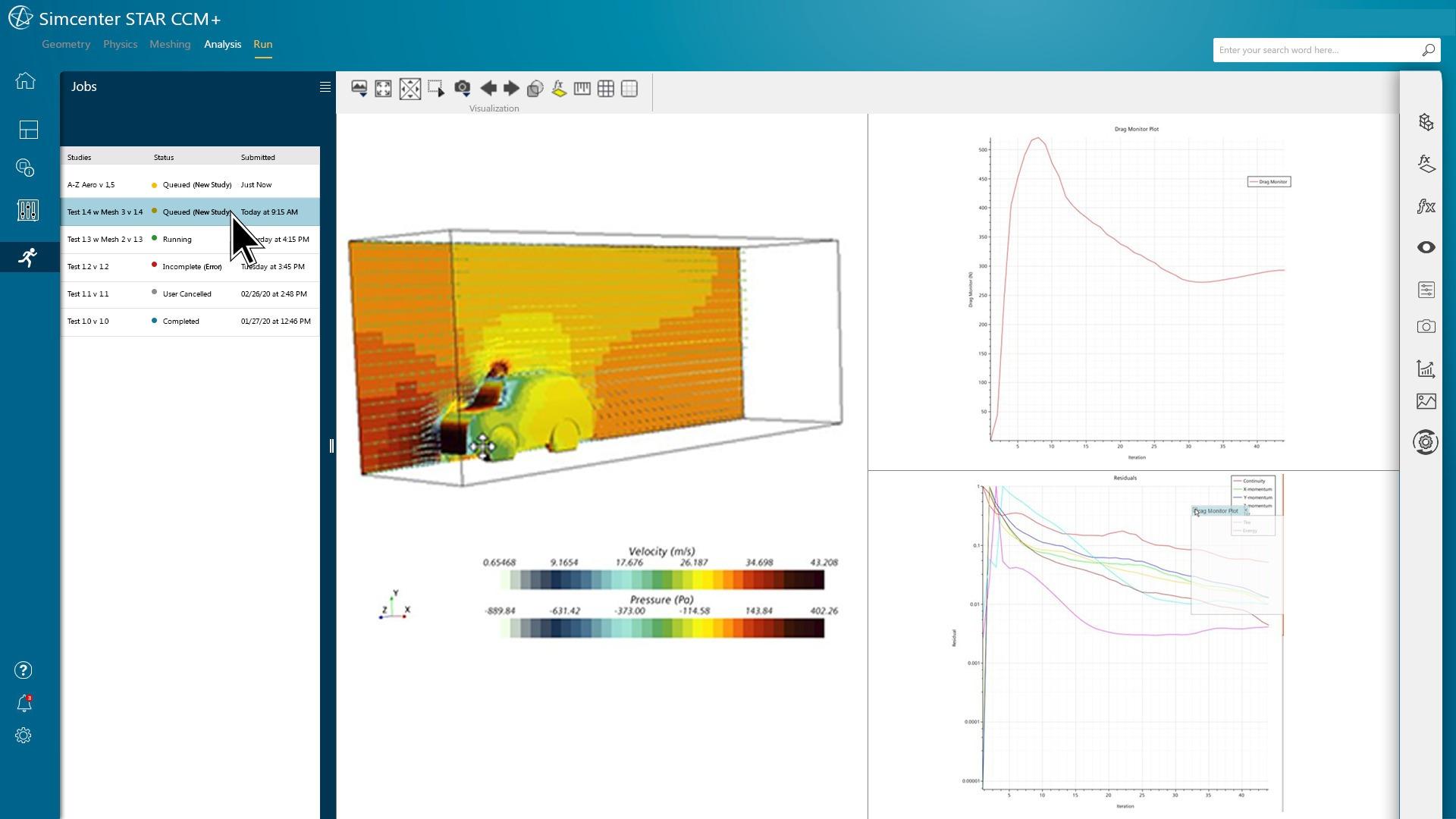
The cloud path had its own friction. Users were reluctant to adopt a cloud-based solution because of security concerns. Renders on a cloud server farm could run for days, often over the weekend. People would come back to corrupted, incomplete, or "trending bad" data, and they had no way to stop the job once it was engaged. I also watched users rotate through screens just to keep an eye on a calculation as it ran.
02Opportunity
The research I was already doing made the case for a pay-as-you-go cloud path, and for landing some improvements in the new cloud offering first, instead of waiting on desktop adoption. That same research argued for stronger backwards compatibility, so newer software could earn trust instead of waiting years for people to leave a known-good version.
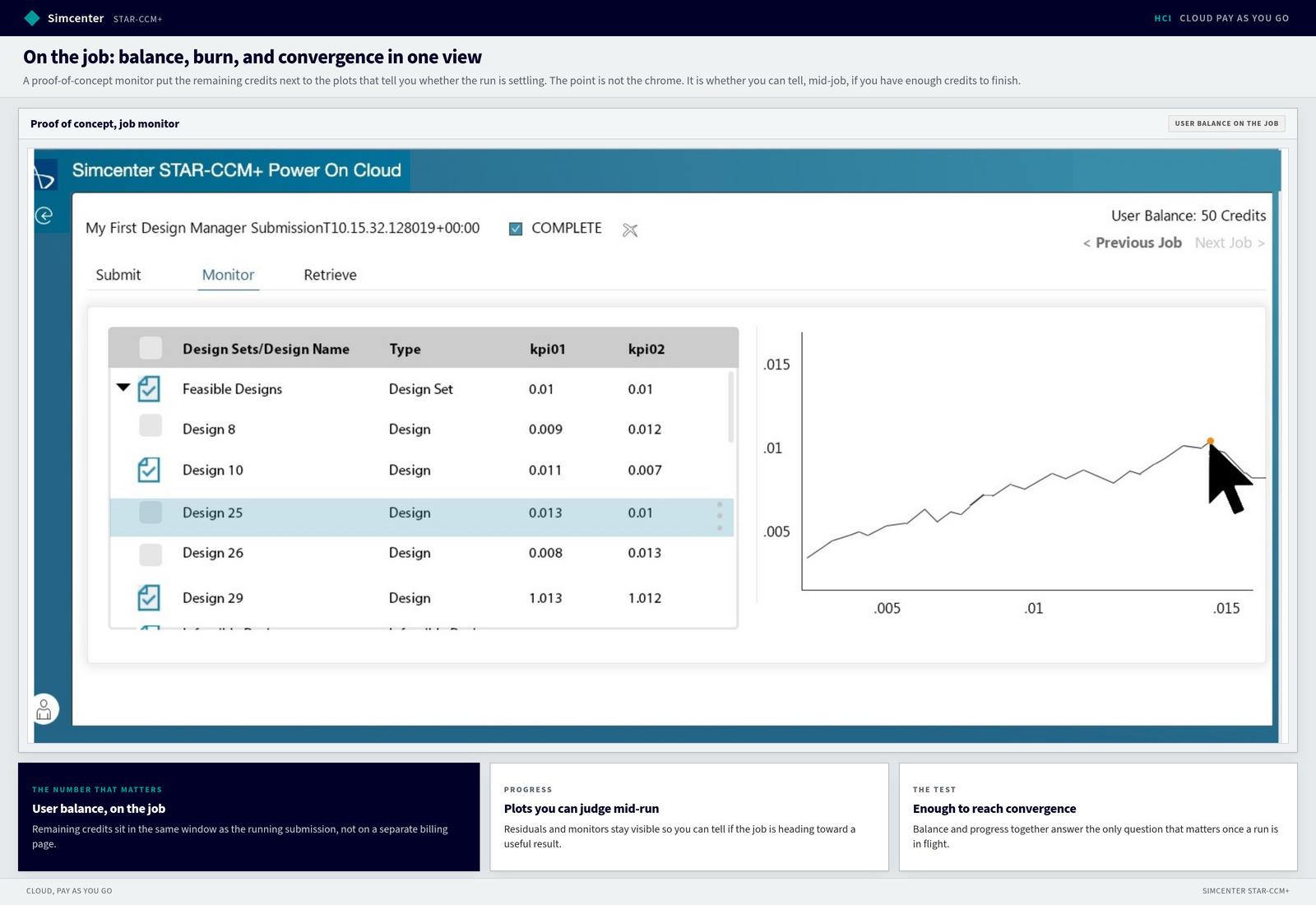
With the Job Manager team, we iterated a stop path and expedited a hotfix, so people could halt a run, inspect the data, and reset the model when they needed to. I also designed a clickable Web Monitoring Client prototype, based on those over-the-shoulder observations, so users could watch a render and its plots without flipping through screens. That prototype did not ship as its own application. Its concepts were incorporated into our Power On Cloud offering, embedded in the Java client. Web Viewer later let people share results without another trip through a licensed desktop session.
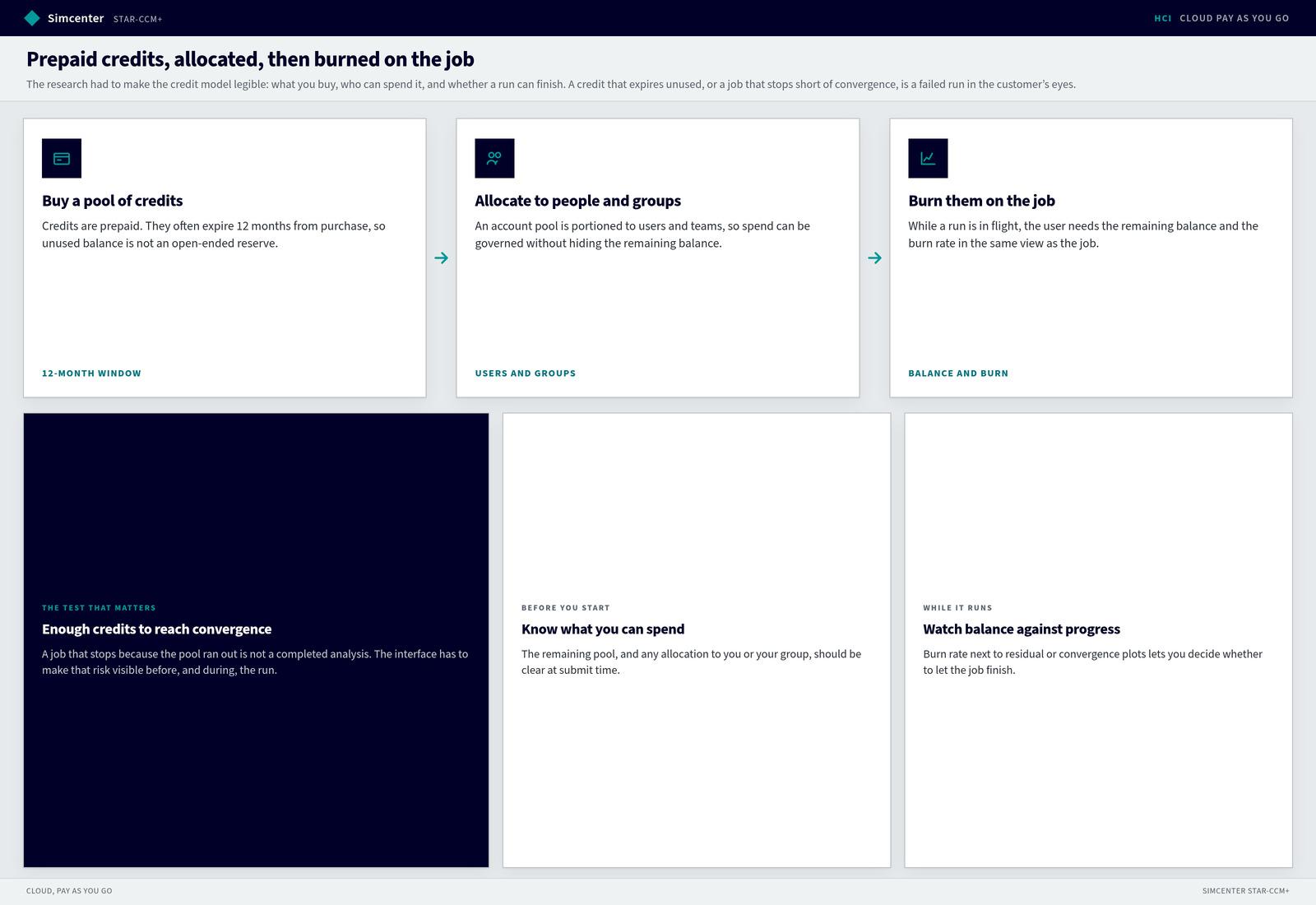
The pay-as-you-go model used prepaid credits, often set to expire 12 months from purchase, and allocated to users and groups from an account pool. While a job ran, people needed to see their balance and burn rate, and to judge whether they had enough credits to reach convergence. Research sessions walked users through submitting jobs, watching that burn rate, and adding credits if they ran short.
03Constraint
We were asking people to trust a cloud path while they still did not fully trust new desktop builds, and while security concerns were real. The Job Manager and monitoring work had to fit a legacy Java client and an engineering team that needed a feasible path, not a separate product we did not have the standing to force. Web Monitoring was a prototype. It had to be useful even if it never shipped under its own name.
A weekend cloud run could go wrong with no way to stop it.
Approach
- Made the case for a pay-as-you-go cloud path and for landing some improvements in the cloud offering first.
- Iterated a Job Manager stop path and a Web Monitoring prototype whose concepts landed in Power On Cloud.
- Designed the credit experience: prepaid balances, a 12-month window, burn rate, and enough credits to reach convergence.
Outcomes
- Formal UX research and design accelerated time-to-market by 50% for the cloud portal initiative.
- The stop-button work drew immediate positive feedback from product management, service support, and clients on a workflow that touched the whole platform.
Artifacts
Reflection
Formal UX research and design accelerated time-to-market by 50% for the cloud portal initiative, and the stop path gave people control once a job was in flight.